One Person Business Ideas for 2026, Ranked by Ops Load
15 one person business ideas for 2026 scored on support, fulfilment, admin, platform risk and time to first revenue, with platform fees checked October 2026.

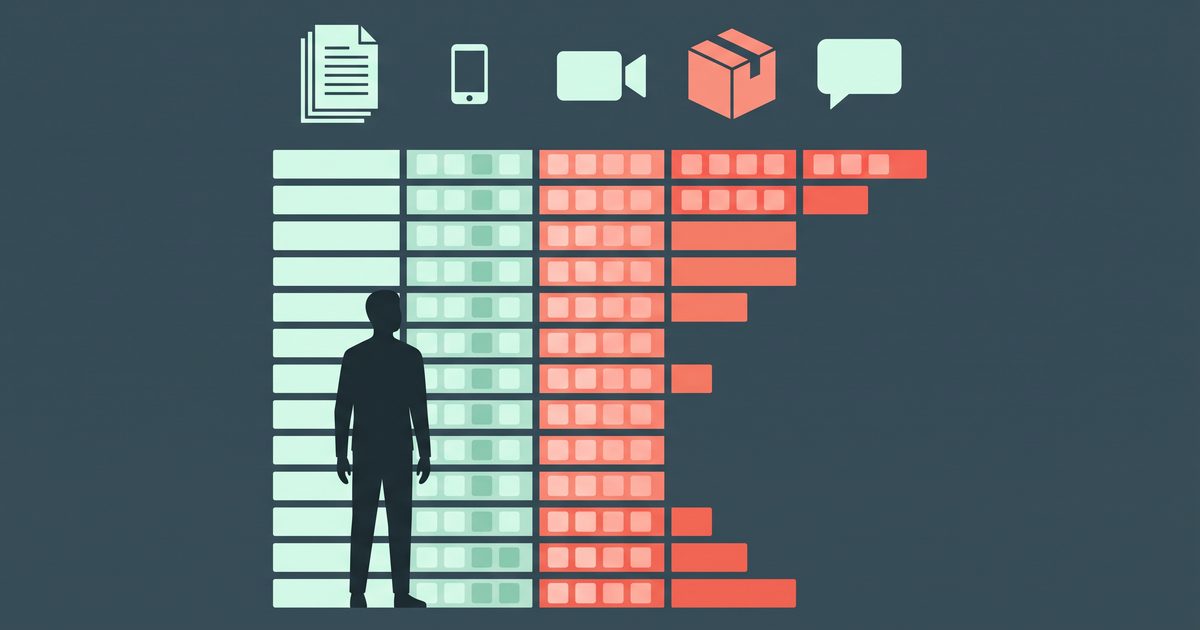
Most lists of one person business ideas rank them by startup cost or income potential, and neither number tells you what the business will cost you every week after launch. That weekly cost is what decides whether one person can keep it running. Below, 15 one-person business models are scored on ops load (support, fulfilment, admin, platform dependency and time to first revenue), followed by the platform fees behind those scores, checked on official pages as of October 2026.
The scores are my editorial judgment, not measured data. I have run three of these models alone, and I say which ones as we go. More growth guides sit in the launch and growth category.
This post touches tax and legal structure in passing. It is not licensed tax or legal advice.
How the ops-load score works
Every model gets a score from 1 (light) to 5 (heavy) on five dimensions. Lower totals mean less recurring operating work for one person. The range is 5 to 25.
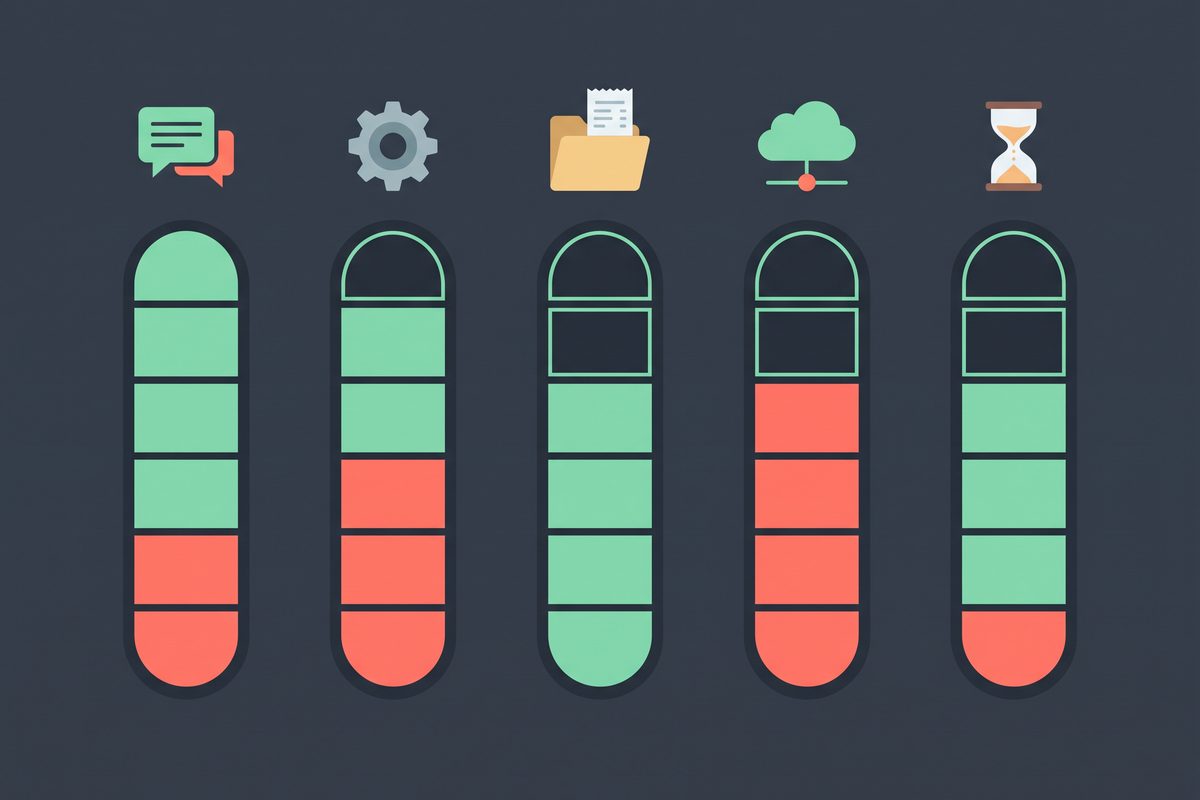
- Support: how many messages, refunds, bug reports and “where is my order” emails a normal week brings.
- Fulfilment: how much of your own time each sale or each week of revenue consumes after the thing exists.
- Admin and tax: contracts, contractor paperwork, sales tax, multi-platform payouts and bookkeeping complexity.
- Platform dependency: how much of the revenue sits on one company’s rules, algorithm or approval queue.
- Time to first revenue: 1 means you can be paid within weeks; 5 means months of work before the first dollar.
Two caveats. The scores assume a typical solo version of each model, not the best-case founder story. And a low total is not the same as a good business: consulting scores light on most rows because the heavy part, your hours, sits in one column.
The ranking: 15 one-person business models by ops load
| Model | Support | Fulfilment | Admin/tax | Platform dependency | Time to first revenue | Total (lower = lighter) |
|---|---|---|---|---|---|---|
| Digital products on your own storefront | 2 | 1 | 3 | 3 | 2 | 11 |
| 1:1 coaching | 2 | 5 | 2 | 1 | 1 | 11 |
| Self-published books (Amazon KDP) | 1 | 1 | 2 | 5 | 3 | 12 |
| Consulting | 2 | 5 | 3 | 1 | 1 | 12 |
| Online course, self-hosted | 3 | 2 | 2 | 2 | 4 | 13 |
| Productized service (fixed scope, fixed price) | 3 | 4 | 3 | 2 | 2 | 14 |
| Paid newsletter | 2 | 4 | 2 | 3 | 4 | 15 |
| Affiliate content site | 1 | 3 | 1 | 5 | 5 | 15 |
| Small agency with contractors | 4 | 4 | 5 | 1 | 2 | 16 |
| Sponsor-funded podcast | 1 | 4 | 3 | 3 | 5 | 16 |
| Print-on-demand shop | 4 | 2 | 3 | 4 | 3 | 16 |
| Paid community or membership | 4 | 4 | 2 | 3 | 4 | 17 |
| Micro-SaaS (web app on subscription) | 5 | 2 | 4 | 2 | 4 | 17 |
| YouTube channel (ad revenue) | 1 | 5 | 2 | 5 | 5 | 18 |
| Mobile app (paid or in-app purchases) | 4 | 2 | 3 | 5 | 4 | 18 |
Editorial scoring by Paschal, October 2026. Not measured; your version of a model can score differently.
Read the table by column, not just by total. If you have little cash runway, sort by the last column. If you have a day job and want something that runs between evenings, sort by fulfilment and support.
What each model really asks of one person
Products you make once
Digital products on your own storefront (templates, guides, ebooks, presets) score lightest because each extra sale costs you almost nothing. The weak spot is traffic. I made an ebook and sold it, and it sold while I paid for ads. When I stopped the ads, sales stopped, and I closed it. That is a platform-dependency problem dressed up as a product problem, and I wrote it up in why my ebook stopped selling. If you go this route, plan the free traffic source first, using the playbook in how to sell an ebook without ads, and price it with this digital product pricing guide.
Self-published books on Amazon KDP have the lightest day-to-day load on the list. No support inbox, no shipping. But Amazon sets the royalty: KDP offers a 35% or 70% eBook royalty option, and under the 70% option it deducts delivery costs that it says average $0.06 per unit sold, as of October 2026. You also live inside Amazon search, which is why platform dependency scores a 5.
Self-hosted online courses carry more support than people expect. Students get stuck, logins fail, and someone asks for a refund on day 29. Time to first revenue is slow unless you already have an audience or an email list.
Audience businesses
A YouTube channel is the one I know best. I built one past 130,000 subscribers as a one-person operation, filming, editing in Final Cut and uploading everything myself. Support is close to zero; viewers comment, they do not file tickets. Fulfilment never ends, though. The channel only earns while you keep publishing, and the work for next week starts the day this week’s video goes up.
Platform dependency is a 5 because YouTube controls both the reach and the money. As of October 2026, the YouTube Partner Program’s ad revenue share requires 1,000 subscribers plus 4,000 qualified watch hours in the last 12 months, or 1,000 subscribers plus 10 million qualified Shorts views in the last 90 days. That threshold is why time to first revenue also scores a 5. If you are starting from zero, this guide to the first 1,000 subscribers covers the slow part.
A paid newsletter is lighter on platform risk than YouTube if you own the list. On Substack, as of October 2026, the platform takes 10% of paid subscriptions, Stripe card processing adds 2.9% plus $0.30 per transaction, and there is a 0.5% recurring billing fee. The weekly issue is the fulfilment cost, and missing weeks shows up as churn.
A sponsor-funded podcast sits close to YouTube: low support, steady production work, slow start. Sponsorship deals add admin, because each one comes with a contract and its own tax paperwork.
An affiliate content site has the lowest admin load on the list and the highest exposure to things you do not control. Search rankings and affiliate program terms can both change without notice. Expect months before the first commission.
A paid community looks like a newsletter on paper. In practice, members expect you to show up, moderate and answer, which pushes support and fulfilment to 4.
Software
A mobile app is my other first-hand model. I have shipped my own apps and I am doing outreach to promote them right now. The build is the visible part. What follows is review queues, OS updates that break things, reviews you need to answer and a store that holds the checkout. As of October 2026, Apple’s App Store Small Business Program charges a 15% commission on paid apps and in-app purchases for developers with no more than $1 million in proceeds in the prior and current calendar year. Google Play’s service-fee page lists 15% on the first $1 million of annual earnings in most markets, and a separate schedule for the US, UK, EEA, Japan and Australia that starts at 10% plus a 5% billing fee where applicable.
My take after shipping: getting attention is the slow part. The app being finished does not shorten time to first revenue by much. That is why I wrote how to promote an app with no budget from the outreach I am doing now.
A micro-SaaS scores the heaviest on support of anything here. Paying subscribers expect uptime and answers. Admin also climbs, because recurring billing across states and countries raises sales tax questions sooner than one-off sales do.
Services
Consulting and 1:1 coaching are the fastest way to the first dollar, and both hit 5 on fulfilment because the product is your time. Admin is modest for coaching and a bit heavier for consulting, where scope and contracts need writing down.
A productized service (one defined deliverable at one price, like thumbnail design or podcast editing) trades a little speed for less back-and-forth. It is the service model most likely to free up hours as you build templates for it.
A small agency with contractors moves fulfilment off your plate and replaces it with management and paperwork. Paying contractors brings year-end information returns into scope, which is why admin scores 5.
Physical goods without inventory
Print-on-demand keeps product and shipping off your desk, but not the customer. Printful’s Free plan is $0 a month, and you pay Printful for the product, fulfillment and shipping after your customer pays you, as of October 2026. On Etsy, a listing costs $0.20 and the transaction fee is 6.5% of the item price plus shipping and gift wrap, with payment processing varying by country. Delivery problems land in your inbox, which is why support is a 4.
What the platforms take (as of October 2026)
These are the numbers behind the platform-dependency column, collected from each company’s own pricing or help page on October 19, 2026.

| Platform | What it charges or requires | Models affected |
|---|---|---|
| YouTube Partner Program | 1,000 subscribers plus 4,000 qualified watch hours in 12 months, or 1,000 subscribers plus 10M Shorts views in 90 days | YouTube channel |
| Apple App Store | 15% commission under the Small Business Program, up to $1M in proceeds | Mobile app |
| Google Play | 15% on the first $1M of annual earnings in most markets; 10% plus a 5% billing fee where applicable in the US and some others | Mobile app |
| Substack | 10% of paid subscriptions, plus Stripe 2.9% + $0.30 and a 0.5% billing fee | Paid newsletter |
| Etsy | $0.20 per listing, 6.5% transaction fee, processing fee by country | Print-on-demand, digital products |
| Amazon KDP | 35% or 70% eBook royalty; 70% minus delivery costs, averaging $0.06 per unit | Self-published books |
| Gumroad | 10% + $0.50 on direct sales; 30% on Discover marketplace sales | Digital products, courses |
| Payhip | Free plan 5%; Plus $29/mo at 2%; Pro $99/mo at 0%, processor fees on top | Digital products, courses |
| Printful | Free plan $0/mo; Growth plan $24.99/mo, free at $12K a year in sales | Print-on-demand |
| Stripe | 2.9% + 30¢ per successful domestic card charge | Any model taking cards directly |
| Kit | Free plan up to 10,000 email subscribers | Newsletter, digital products, courses |
Fees change. Check the linked page before you set prices.
What running three of these alone taught me
I run several online businesses at once, by myself, and the ops load adds up in a way no single-model list prepares you for. Three things decided how much each one cost me.

The first is whether the work stops when you stop. The ebook stopped earning the week the ads stopped. The YouTube channel never stopped needing the next video. Neither was “passive”. One leaned on paid traffic, the other on my weekly output.
The second is who owns the checkout. With the channel and the apps, a platform sits between me and the money and sets the rules. With a product on my own storefront, the rules are mine, but so is the traffic problem.
The third is what fills the calendar. I run the week on Google Calendar, with Claude, GPT and Hermes handling drafts, research and sorting. That keeps admin from eating the day. It does not touch fulfilment. A video still has to be filmed, and an outreach email still has to be one I would send. If you plan to stack models, put the high-fulfilment one first and add only light-fulfilment models beside it.
The admin every one-person business shares
Whatever model you choose, some paperwork is fixed. Per the IRS, you generally have to file a return if your net earnings from self-employment were $400 or more, and self-employed people generally pay estimated tax quarterly because no employer withholds it. The creator taxes hub covers quarterly estimates, deductions and 1099 forms in plain language.
Legal structure is optional at the start. A sole proprietorship is the default for one person. If liability is the worry, read whether a YouTube channel needs an LLC, since the trade-offs carry over to most online models.
Score your own idea: a five-question checklist
If your idea is not on the list, score it yourself. Answer each with 1 (light) to 5 (heavy):

- In a normal week, how many messages will customers send that only I can answer?
- After the thing exists, how many of my hours does each week of revenue cost?
- Will I deal with contracts, contractors, sales tax or more than two payout platforms?
- If one company changed its rules tomorrow, how much revenue would be left?
- How many months of work come before the first dollar?
Above 17 total, plan for this to be the only business you run. Below 13, it can sit next to another one. The free tools on this site help with the money side once you have a number.
Pick the two models from the table that fit your runway, score them with the five questions this week, and start the one with the lower fulfilment score.
Frequently asked questions
What is the easiest one person business to run?
On ongoing workload, a digital product sold from your own storefront or 1:1 coaching scores lightest in this ranking. They pull in opposite directions, though. A digital product is light after launch but needs a steady traffic source, while coaching pays fast but every dollar costs an hour of your calendar. Pick the trade-off you can live with, not the lowest number.
Which one person business makes money fastest?
Services. Consulting, coaching and a productized service can earn on the first sale, because the buyer pays for your time or output and you need no audience first. Audience models are the slowest. YouTube ad revenue, for example, only opens after 1,000 subscribers plus 4,000 qualified watch hours in 12 months, or 10 million Shorts views in 90 days, per YouTube's rules as of October 2026.
Do I need an LLC to start a one person business?
No. A one-person business can run as a sole proprietorship, and the IRS treats you as self-employed either way. An LLC mainly adds liability separation and some paperwork. It does not change self-employment tax by itself. Read the LLC trade-offs for creators and talk to a tax professional before forming one. This is not licensed advice.
Can AI tools run a one person business for me?
They can take over drafting, sorting and scheduling, which cuts the admin and some support work. They do not remove fulfilment or platform risk. If a model's heavy part is making a video every week or answering bug reports, AI shortens the hours but you still own the outcome. Score the idea as if the AI help were already in place, then see what is left.
Sources
- YouTube Partner Program overview and eligibility — YouTube Help
- App Store Small Business Program — Apple Developer
- Service fees — Play Console Help
- How do paid subscriptions on Substack work? — Substack FAQ
- Fees and Payments Policy — Etsy
- eBook Royalties — Kindle Direct Publishing Help
- Gumroad pricing
- Payhip pricing
- Printful pricing
- Stripe pricing
- Kit pricing
- Self-Employed Individuals Tax Center — IRS
This article is general information based on the author's experience. It is not licensed financial, legal, or tax advice. See the editorial policy.