Cold Outreach for an App Launch: Messages, Cadence, Rules
A solo developer's cold outreach for an app launch: who to message, three message variants, follow-up cadence, a tracking sheet, and the CAN-SPAM and DM limits.

You shipped an app, the budget is zero, and the plan is to message creators and community owners one at a time. I am doing the same thing for my own app right now. This post covers what I only sketched in how to promote an app with no budget: who to look for, the message with three variants, the follow-up cadence, and the sheet I track it in. It also lays out the legal and platform limits I checked against the FTC’s and the platforms’ own pages before I sent anything. By the end you will have a message you can adapt in ten minutes and a rule for when to stop.
What I am doing, and why there are no numbers yet
The setup is simple. I built and shipped an app, and I am writing individual messages to people whose audience already has the problem it solves. Each message is written by me, references something the person actually made, and asks for something small.
I have no reply rate to report. The experiment is live, the sheet is mostly empty, and I would rather say that than quote a number from a vendor blog and pretend it came from my inbox. When the columns fill, I will update this post.
What I can share is the operating system around the messages, because that part was decided before the first send. Cold outreach done one-to-one, by hand, with an easy out, is a conversation with a stranger. The same words pasted to two hundred addresses is what the FTC, Google, and every platform mean by spam. The whole design below exists to stay on the first side of that line.
Who to message: three lists, not one
Every outreach guide assumes the target is an influencer with a follower count. For an app, that is one of three lists, and usually the least useful one.
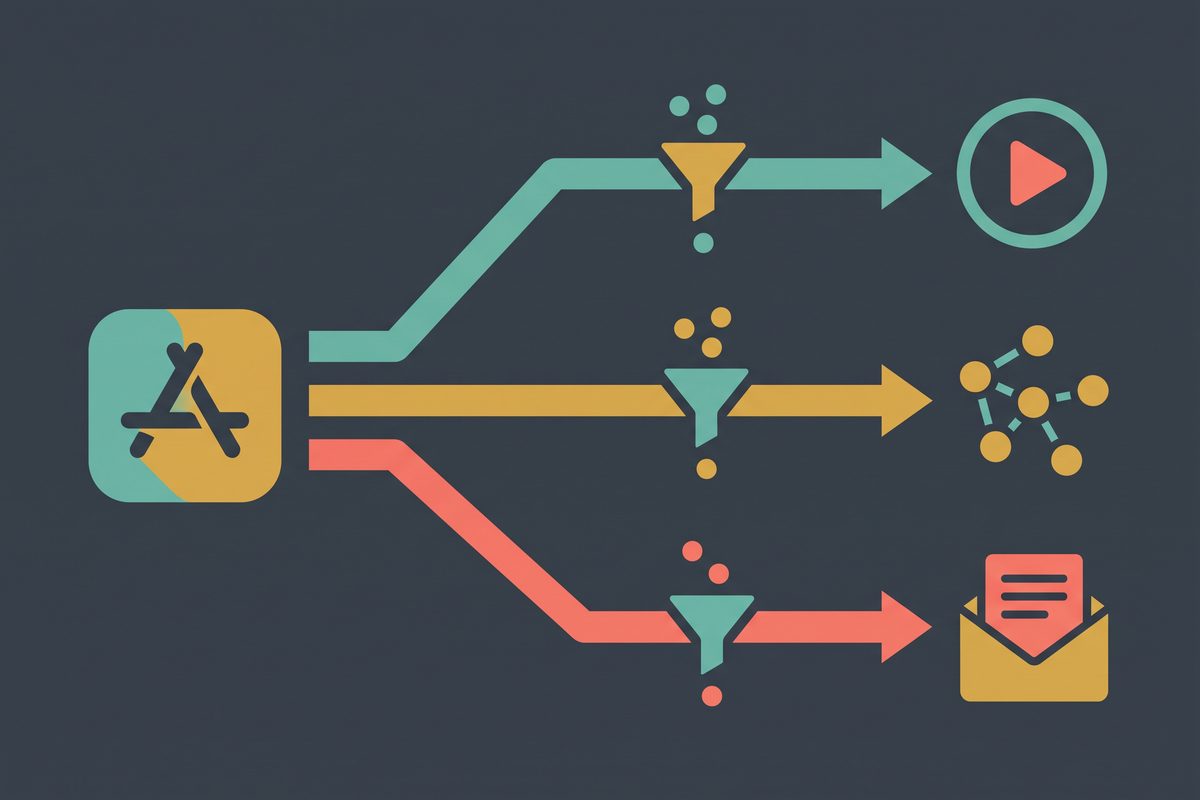
The first list is creators: people who make videos, posts, or streams on the topic your app touches. The second is community owners: the people who run a subreddit, a Discord server, a forum, or a Facebook group where your users already gather. The third is writers with a list: newsletter authors and bloggers who send to the same readers every week.
The filter I use for all three is the same. Has this person, in the last 90 days, said something about the problem my app solves? Not the category, the problem. A creator who reviews productivity apps is a weak match. A creator who complained on camera about the exact friction my app removes is a strong one, and that complaint becomes the personal line of the message.
Finding them costs hours, not money. Search the platform for the problem phrased the way a frustrated user would type it, not the way a marketer would. Read the comments under the results; the people answering questions in comment threads are often community owners in the making. For newsletters, search the archive pages that most newsletter tools publish for the same phrases.
Then find the address. YouTube has no direct messages, so the route is the channel’s About section, where the owner can list a business email behind a “View email address” button. If they have not listed one, that channel is off the list, not a reason to guess an address. Instagram and X creators usually put an email in the bio or a link page. Community owners are reachable through the platform they moderate, and a modmail or a mod DM is the correct door, not a post in their community. Newsletter writers answer replies to their own newsletter more reliably than any other channel, because the reply lands in the inbox they read every send day.
The message: one anatomy, three variants
The anatomy is five parts: who I am, why this person specifically, what the app does in their audience’s words, one small ask, and an easy out. I described that pattern in the no-budget post. What it did not show is that the same five parts read differently depending on which of the three lists the recipient sits on, and that only two of the five lines change.

The three versions below are the ones I use, with the app’s name and my personal lines stripped out. The bracketed lines are the two that must be rewritten for every person. Everything else stays fixed.
Variant A, for a creator (email or DM):
Subject: the [specific friction] you mentioned in [video/post title]

Hi [first name],

I'm a solo developer; I ship one app at a time.
[One sentence about the specific moment in their work where the problem showed up.]
I built an app that [what it does, in the words their audience would use].
Would you try it for a week? Free access to everything is at [link]. If it earns a mention, great. If it doesn't, one line on what missed would help me more than a mention would.
If this isn't for you, no reply needed, and I won't write again unless you do.

[Name]
[Postal address]
Variant B, for a community owner (modmail, mod DM, or email):
Subject: an app for the [recurring question] thread, no post from me

Hi [first name or mod handle],

I'm a solo developer; I ship one app at a time.
[One sentence naming the recurring question or thread in their community where the problem shows up.]
I built an app that [what it does, in the words members use in that thread].
I'm not going to post it in the community. If you'd rather try it yourself first, free access is at [link]. If it belongs in a wiki, a pinned thread, or nowhere, that's your call.
If this isn't for you, no reply needed.

[Name]
[Postal address]
Variant C, for a newsletter writer (sent as a reply to their latest issue):
Subject: Re: [their latest issue subject]

Hi [first name],

I'm a solo developer; I ship one app at a time.
[One sentence about the paragraph or link in a recent issue where the problem came up.]
I built an app that [what it does, in the words they used in that issue].
Free access is at [link] if you want to try it. I'm not asking for a placement; if it turns out useful to your readers you'll know better than I do where it fits.
If this isn't for you, no reply needed.

[Name]
[Postal address]
Three judgments sit inside these.
The ask is never a call. Every template in the top search results ends with “would you be open to a quick 15-minute call.” A creator with an audience does not owe a stranger fifteen minutes, and an indie app cannot fill a calendar with them. Trying it for a week is a smaller ask, and the outcome of that week is more useful to me than a meeting would be.
The offer is free access, said plainly, with no condition attached. The moment a mention becomes the price of the access, two things happen: the creator has to disclose the arrangement, and I am responsible for telling them so. That is not a reason to avoid the offer. It is a reason to write the sentence so both of us know what it is.
The postal address line is not decoration. It is the reason the email version of these messages is legal, and the next sections explain why.
Follow-up cadence: one, then stop
Day 0 is the first message. Day 7 is the only follow-up. After that, silence, unless they write.
The follow-up is three lines: a reply to my own first message so the thread is intact, one new piece of information (a feature that shipped that week, or a use their audience asked about), and the same easy out. It does not say “just bumping this.” It does not add urgency. Nothing in an indie app launch is urgent to the person receiving the message, and pretending otherwise is the fastest way to get filed as spam.
A “no” is honored the day it arrives, and the row in the sheet is marked so I never write to that address again. A non-reply after the follow-up is treated as a no. Someone who says “maybe later” gets a calendar date I set from their words, not from my hope, and nothing before it.
The popular advice is three to five touches, sometimes spaced on a Fibonacci sequence. That advice comes from sales teams sending to companies. It is the wrong model for a solo developer writing to one creator, because the third message is the one that gets screenshotted.
What counts as spam, and where the limits are
The word gets used loosely. Here it means two specific things: what United States email law requires of a commercial message, and what each platform technically allows before it steps in. I checked both against the primary pages on 2026-09-14, because none of the guides that rank for this topic link a single one of them.

The email law
CAN-SPAM covers any email whose primary purpose is to advertise or promote a commercial product or service. A message asking a creator to try your app is that. The FTC’s guide is explicit that the law makes no exception for business-to-business email, so “I only wrote to professionals” is not a defense.
For a one-person sender, the requirements reduce to five habits. No false or misleading header information, no deceptive subject line, an honest signal that the message is a promotion, a valid physical postal address in the message, and a clear way to opt out that you honor. Opt-out requests have to be processed within 10 business days, and the opt-out mechanism has to keep working for at least 30 days after the email goes out. Each email that breaks the rules can carry a penalty of up to 53,088 USD.
That is why my messages carry a postal address and a sentence that says no reply is needed and I will not write again. The “easy out” line is doing legal work, not only social work.
CAN-SPAM is an email law. A DM on X, Instagram, or TikTok is not email, and the FTC guide does not reach it. Platform rules do, and those are stricter in practice because a reported account stops working.
The disclosure duty when you give free access
If a creator gets free access and mentions the app, the FTC’s endorsement rules apply. The FTC’s own FAQ says a connection between an endorser and a marketer that a significant minority of consumers would not expect, and that would affect how they weigh the endorsement, has to be disclosed. A product handed over with the expectation of promotion is that kind of connection. The FTC’s influencer guide puts the same rule from the creator’s side: disclose if you received anything of value to mention a product, including free or discounted products. The disclosure goes with the endorsement itself, not in a profile page or behind a “more” button. Acceptable words are plain ones such as “ad” or “sponsored”; abbreviations like “sp” or “collab” are not.
The part most app makers miss is that the advertiser is ultimately responsible for what people do on its behalf, and the FTC expects you to tell members of your network what they must disclose. So Variant A says, in the first message, that if they post about it they need to say they got free access. I would rather spend one sentence on it now than have the awkward second conversation later.
The platform and mailbox limits
These are the numbers I could confirm from official help pages on 2026-09-14. Where a platform’s page would not load for me, the row says so rather than borrowing a number from a third-party blog.
| Channel | Official rule or limit | What it means when you send by hand | Source |
|---|---|---|---|
| Gmail, personal account | Sending is throttled at more than 500 emails in a day or 500 recipients on one email; the block lifts within 1 to 24 hours | Irrelevant at a hand-written pace; hitting it means you stopped writing by hand | Gmail Help |
| Gmail, Google Workspace | 2,000 messages per day on a paid account; 500 per day during the trial; 3,000 unique recipients per day, of which 2,000 external | Same: a ceiling you should never approach | Workspace Admin Help |
| Gmail, any sender | SPF or DKIM authentication, and a user-reported spam rate under 0.3% in Postmaster Tools; at 5,000+ messages a day, SPF, DKIM, and DMARC plus one-click unsubscribe | The spam-rate rule applies at any volume: a few recipients marking you as spam is a real delivery risk | Email sender guidelines |
| X (formerly Twitter) | 500 direct messages per day; 400 follows per day; DMs from accounts you do not follow land in a request folder | A creator who has not opted in to open DMs will see your message in requests, if at all | X Help Center |
| TikTok | DMs require mutual following; otherwise you get one message request, and no second one until they accept | One shot. Make it the whole message, and expect no receipt | TikTok Support |
| YouTube | No direct messaging; a channel can show a business email under About via “View email address”, and only if the owner added one | Email is the only route; no email listed means no outreach to that channel | YouTube Help |
| Instagram’s help pages on message requests did not load for me on 2026-09-14, so I am not quoting a limit | Non-followers land in a request folder; treat it like TikTok’s one shot | not confirmed | |
| LinkedIn’s help pages block automated fetching, so I am not quoting an invitation or InMail limit | Not a creator channel for most consumer apps anyway | not confirmed |
Two of those rows change behavior. The Gmail spam-rate line means a handful of angry recipients can hurt delivery to everyone else, which is one more argument for the easy-out sentence. The TikTok row means a message request is the entire pitch; there is no follow-up on that platform, so Variant A has to stand alone.
More on how mailbox providers treat senders, from the newsletter side, is in email marketing for creators.
The sheet: nine columns and what each decides
The sheet is a plain spreadsheet. Nine columns, one row per person, and the discipline is that no message goes out until its row exists.
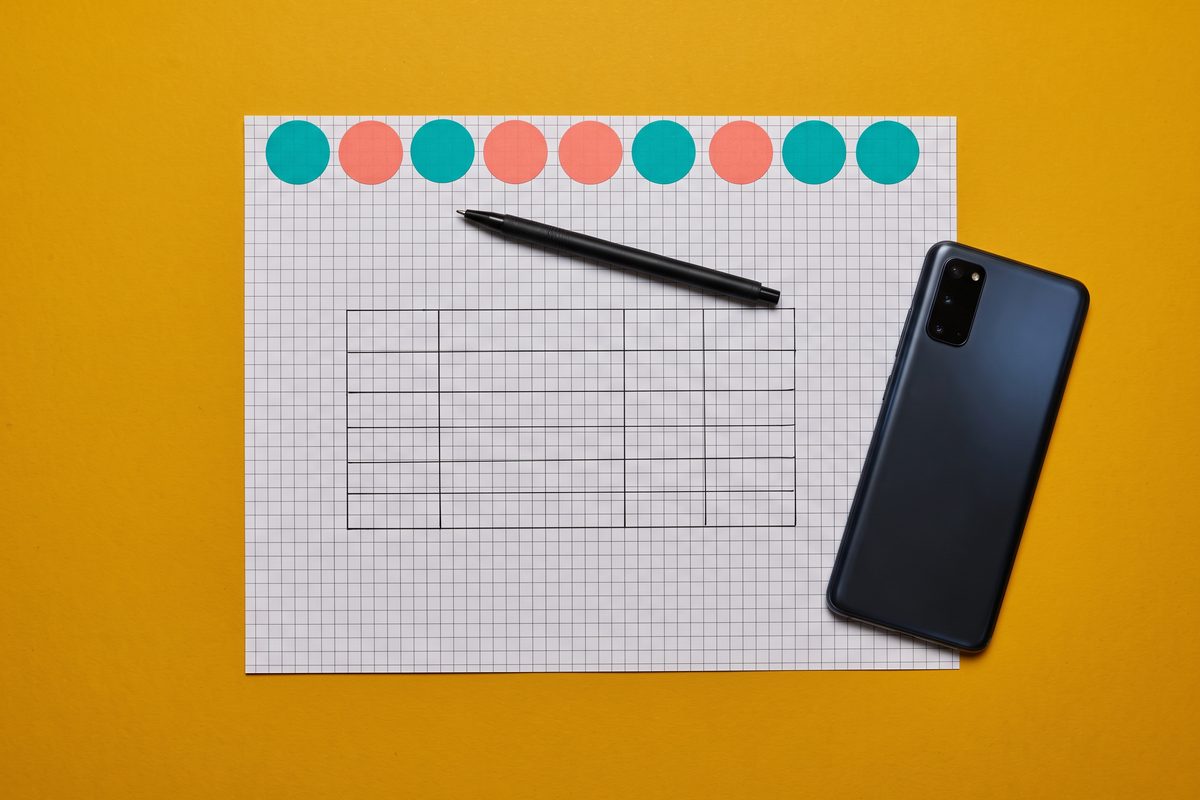
- Date sent.
- Name, and the address or handle used.
- List type: creator, community owner, or newsletter writer.
- Channel: email, DM, modmail, or newsletter reply.
- Link tag: the campaign link or UTM created for this one person.
- Follow-up due: date sent plus seven days.
- Replied: no, or the date.
- Outcome: yes, no, later with a date, or opt-out.
- Installs through the link tag.
Three ratios come out of it, and each one answers a different question. Replies divided by sent tells me whether the message gets read at all, and if it is near zero the subject line and the personal line are the suspects. Yes divided by replies tells me whether the ask is sized right; people who reply and still decline are telling me the offer, not the message, is off. Installs divided by yes tells me whether the audience was the right one, and that is the only column I cannot fill by hand. The one-link-per-person setup that fills column 9 from App Store Connect and Play Console is described in the attribution section of the no-budget post.
Column 3 is the one I would not skip. When the sheet has 50 rows, the list type is what lets me see that, say, community owners reply and creators do not, which changes where the next 50 hours go.
When to stop
The stop rule was written before the first message, because the version of me with 40 unanswered rows is not the right person to decide.
Three checkpoints, by rows sent, not by weeks.
At 25 sent: if replies are zero, stop sending and rewrite. The message is not being read. Change the subject line and the personal line only, and send the next 25 with the new version.
At 50 sent: if there are replies but no yes, the ask is wrong for this audience. Shrink it or change the list type before sending more. If there is at least one yes, keep going without changes; one is too few to tune on.
At 100 sent: if column 9 is still zero across every yes, the audience is not where the app’s users are, and more outreach will not fix that. Stop, and spend the hours on the app or on the channel that did produce installs. If installs exist, drop to a maintenance pace of five messages a week and let the relationships from the yes rows do the work.
My sheet has not reached the first checkpoint. That is the honest state of it on the day this was published, and the rule above is what will decide the next month, not how I feel about the empty rows.
Tonight, write your own three checkpoints at the top of a blank sheet, then add five names that match the 90-day filter, and send nothing until the sheet has both.
Frequently asked questions
Does CAN-SPAM apply to a single email I send to one creator?
Yes, if the email's primary purpose is to promote your app. The FTC's guide says the law covers every commercial email and carves out no business-to-business exception. A one-to-one message still needs truthful headers, a real postal address, and a way to say stop.
Does CAN-SPAM apply to Instagram, X, or TikTok DMs?
CAN-SPAM is an email law. DMs fall under each platform's own rules and technical limits instead: X caps DMs at 500 a day, TikTok allows one message request per person until they accept, and YouTube has no DM at all. Getting reported for unsolicited DMs is a platform problem, not an FTC one.
Should I offer creators money or free access?
For an indie app, free access to the full app is the honest offer, and it must be stated as an offer, not a bribe. If the creator receives free access with the expectation that they mention the app, the FTC treats that as a material connection they have to disclose, and the maker is responsible for telling them so.
How many follow-ups before it is spam?
There is no legal number. The rule in this post is one follow-up, a week after the first message, then silence. Someone who says no is removed from the sheet that day. Persistence beyond a second message costs more reputation than it earns replies.
Can I use an AI tool to write the outreach messages?
Use it to draft the fixed lines and to check tone, then write the personal line yourself. The one sentence that references the recipient's actual work is the sentence that gets read, and it cannot be templated without turning the message into what every platform defines as spam.
Sources
- FTC — CAN-SPAM Act: A Compliance Guide for Business
- FTC — The FTC's Endorsement Guides: What People Are Asking
- FTC — Disclosures 101 for Social Media Influencers
- Gmail Help — Gmail sending limits (personal accounts)
- Google Workspace Admin Help — Gmail sending limits in Google Workspace
- Gmail Help — Email sender guidelines
- X Help Center — Understanding X limits
- X Help Center — About Direct Messages
- TikTok Support — Direct message settings
- YouTube Help — Business inquiry emails
This article is general information based on the author's experience. It is not licensed financial, legal, or tax advice. See the editorial policy.