Self-Employed Health Insurance Deduction: 2026 Form 7206 Worked
How the self-employed health insurance deduction works in 2026: who qualifies month by month, Form 7206 worked at $60,000 profit, and where each premium goes.


You pay your own health insurance, and you’ve heard it’s “100% deductible” once you’re self-employed. That’s true only for the months you qualify and only up to a limit most guides never compute. This post settles both with a hypothetical 2026 Form 7206 worked line by line, a month-by-month eligibility calendar, and a map of which line each premium lands on.
This is general information, not tax advice, and Paschal is not licensed to give it. The primary sources are the IRS Instructions for Form 7206 and the forms linked below; for your own return, check with a tax professional. The rest of the creator tax guide, every form, tax and calculator in filing order, is at Creator Taxes.
What the deduction covers, and what it doesn’t touch
The self-employed health insurance deduction lets a business owner deduct premiums for medical and dental coverage for themselves, a spouse, and dependents. It also covers a child who was under 27 at the end of the year, whether or not that child is your dependent. Qualified long-term care premiums count too, up to an age-based cap, and so do Medicare premiums you voluntarily pay for insurance in your name.
It is an adjustment to income on Schedule 1, line 17. Not a Schedule C expense. That placement has two consequences.
First, you get it whether you itemize or take the standard deduction, because it lowers adjusted gross income. Second, it does nothing to self-employment tax. The instructions say plainly that you can’t subtract it when figuring net earnings for SE tax from the business that set up the plan. If the 15.3% is the bill that hurts, self-employment tax explained covers what actually moves it.
Who qualifies
You need net earnings from self-employment. In practice that means one of three setups:
- A sole proprietor or single-member LLC filing Schedule C with a profit.
- A partner with self-employment earnings reported on Schedule K-1 (Form 1065).
- A more-than-2% shareholder of an S corporation whose premiums are paid by the corporation and included in wages.
For a Schedule C filer, the policy can be in the business’s name or your own name. Most solo operators buy it personally on a Marketplace or directly from an insurer. That’s fine.
What disqualifies you is a loss. Form 7206 limits the deduction to the earned income of the business under which the plan is established, so a year in the red produces no deduction from that business. If you run a business as an S corporation, the limit uses the Medicare wages the corporation paid you instead (line 11); how to pay yourself as a solopreneur covers that payroll side.
The employer-plan rule, month by month
This is the rule that knocks out more side-business owners than the profit limit. You can’t take the deduction for any month you were eligible to participate in a subsidized health plan from any employer, including your spouse’s, at any time during that month, even if you didn’t enroll. The rule also reaches the employer of a dependent or an under-27 child: a month in which they could join that employer’s subsidized plan is out too.
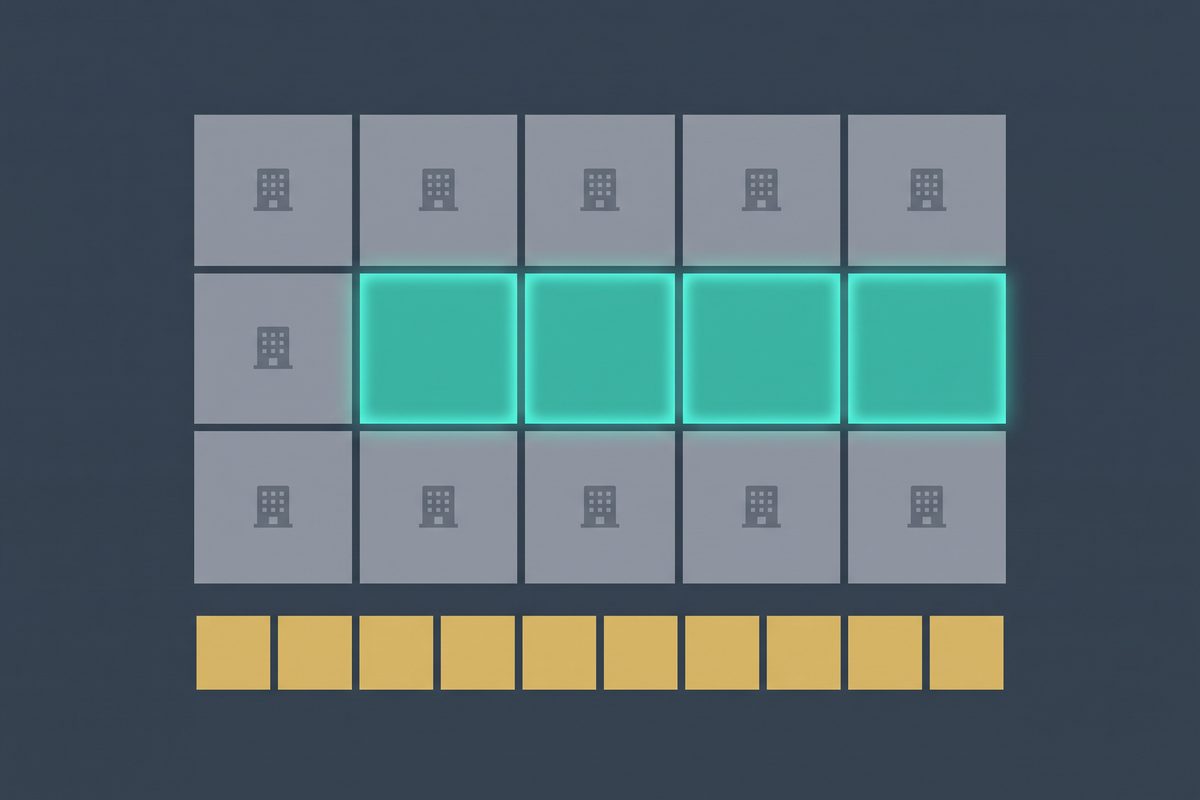
Three details matter. Eligibility counts, not enrollment. One day of eligibility removes the whole month. And long-term care is tested separately: if no employer offers you a subsidized LTC plan, LTC premiums can still count in a month when the medical plan can’t.
The IRS instructions don’t define “subsidized.” If an employer pays any part of the cost, plan on treating that month as out unless a tax pro tells you otherwise.
A hypothetical 2026 calendar for a married owner. Day job with a subsidized plan ended March 13; self-employed from then on; spouse started a job on September 15 whose subsidized plan was open to spouses, and the couple declined it. The owner also pays for a qualified LTC policy, and neither employer offered a subsidized LTC plan. (Rules from the 2025 and 2026 draft Instructions for Form 7206.)
| Month (2026) | Employer plan the owner could join that month | Health premiums count? | LTC premiums count? |
|---|---|---|---|
| January | Own day-job plan | No | Yes |
| February | Own day-job plan | No | Yes |
| March | Own day-job plan, through March 13 | No (eligible part of the month) | Yes |
| April | None | Yes | Yes |
| May | None | Yes | Yes |
| June | None | Yes | Yes |
| July | None | Yes | Yes |
| August | None | Yes | Yes |
| September | Spouse’s plan, from September 15 | No | Yes |
| October | Spouse’s plan (declined) | No | Yes |
| November | Spouse’s plan (declined) | No | Yes |
| December | Spouse’s plan (declined) | No | Yes |
Five eligible months out of twelve. With a $650 monthly premium, line 1 of Form 7206 gets $3,250, not $7,800. The LTC premium for all twelve months still goes on line 2, subject to the age cap.
If you’re about to take a job, or your spouse is, look at the plan’s start date before you assume anything. The month the eligibility begins is the month the deduction stops.
The limit, worked on Form 7206
Form 7206 caps the deduction at the smaller of two numbers: what you paid (line 3) and what the business earned after two subtractions (line 13). The subtractions are the ones most articles skip:

- Line 7 takes out the deductible half of self-employment tax from Schedule 1, line 15, scaled to this business’s share of your profits.
- Line 9 takes out your SEP, SIMPLE, or qualified plan contribution from Schedule 1, line 16, attributable to the same business.
Before going independent I worked in finance, and the habit that stuck is simple: run the form with real numbers before trusting a headline like “100% deductible.” So here it is with three hypothetical owners.
2026 Form 7206 computed for three hypothetical single sole proprietors with one Schedule C business, $7,800 of annual premiums bought outside the Marketplace (no premium tax credit), no wages, and the standard deduction. Amounts rounded to the dollar; calculated by script on October 5, 2026 from the 2026 draft Form 7206 and Schedule SE.
| Form 7206 line | What the line does | A: $60,000 profit, no retirement | B: $60,000 profit, $10,000 SEP-IRA | C: $9,000 profit, $1,000 SEP-IRA |
|---|---|---|---|---|
| 1 | Premiums paid for plan under the business | 7,800 | 7,800 | 7,800 |
| 3 | Total premiums (lines 1 + 2) | 7,800 | 7,800 | 7,800 |
| 4 | Net profit of the business with the plan | 60,000 | 60,000 | 9,000 |
| 7 | Half of SE tax × this business’s share | 4,239 | 4,239 | 636 |
| 8 | Line 4 minus line 7 | 55,761 | 55,761 | 8,364 |
| 9 | Retirement contribution from this business | 0 | 10,000 | 1,000 |
| 13 | Earned-income limit | 55,761 | 45,761 | 7,364 |
| 14 | Deduction (smaller of line 3 or 13), to Schedule 1, line 17 | 7,800 | 7,800 | 7,364 |
| — | Premiums left over (Schedule A if itemizing) | 0 | 0 | 436 |
| — | Self-employment tax, with or without the deduction | 8,478 | 8,478 | 1,272 |
| — | Federal income tax saved by the deduction | 749 | 749 | 0 |
Read A first. The limit is $55,761, far above the premiums, so all $7,800 goes to Schedule 1. Self-employment tax stays at $8,478. Federal income tax falls by $749.
That $749 is less than the 12% bracket would suggest ($936). The reason is the qualified business income deduction. The IRS treats the self-employed health insurance deduction as attributable to the business, so it shrinks QBI as well. At this income, the QBI deduction was capped at 20% of taxable income before QBI, and taxable income fell too. Net effect: each deducted dollar saved 9.6 cents, not 12.
B adds a $10,000 SEP-IRA contribution, under the roughly 20% ceiling Pub 560 applies to a self-employed owner’s own SEP. Line 9 cuts the limit by exactly $10,000, to $45,761. Still well above the premiums, so the deduction doesn’t change. At a normal profit, retirement contributions and health premiums don’t compete. Solo 401(k) vs SEP IRA has the contribution math.
C is where the limit bites. After half of SE tax and the $1,000 SEP contribution, the business has $7,364 of room, so $436 of premium falls off Schedule 1. Those leftover premiums can go on Schedule A as medical expenses, but only the part of total medical costs above 7.5% of AGI counts there. And at $9,000 of profit, the standard deduction already wipes out taxable income, so the deduction saves no federal income tax at all.
The takeaway: if profit is thin, check line 13 before making a retirement contribution late in the year. If profit is healthy, the limit almost never matters and the real question is eligibility by month. To see the SE tax side of your own number, the self-employment tax calculator gives the line 7 input.
Form 7206 or the worksheet?
Not everyone has to file Form 7206. The IRS says you can generally use the worksheet in the Form 1040 instructions instead. Form 7206 is required if any of these apply:
- You had more than one source of self-employment income.
- You file Form 2555 (foreign earned income).
- You’re using amounts paid for qualified long-term care insurance.
If you have more than one plan under different businesses, each plan gets its own Form 7206 and its own earned-income limit. You can’t add the profits of two businesses together to make room. When you do have two profitable businesses, lines 5 and 6 apportion the half-SE-tax subtraction between them.
Marketplace plans and the premium tax credit
If you buy through the Marketplace and get advance payments of the premium tax credit, two tax breaks are reaching for the same dollars. You can’t get both on the same premium. Rev. Proc. 2014-41 limits the deduction for those premiums to the part not paid through advance credit payments, with an adjustment for any advance credit you have to repay, and Form 8962 is where the credit itself is figured and reconciled against the advance payments.
It’s circular. The deduction lowers your household income, which raises the credit, which lowers the premiums left to deduct. Pub 974 handles this with an iterative calculation method and a simplified calculation method, and the revenue procedure lets you use any method that satisfies the law. Good tax software runs one of them. Doing it by hand is where errors come from.
Two 2026 points raise the stakes. HealthCare.gov bases your savings on estimated net self-employment income for the year of coverage, not last year’s. And for tax years after 2025, there is no cap on paying back excess advance credit: if your advance payments beat the credit you’re allowed, the whole difference comes off your refund or adds to your balance due. A self-employed person whose income jumps mid-year should update the Marketplace estimate rather than wait for April.
Which line does it go on
Where each health-related amount is figured and where it lands, for a sole proprietor filing a 2026 return. Collected from IRS, CMS and HealthCare.gov pages on October 5, 2026. Line numbers are from the 2025 Schedule 1 and the 2026 draft Form 7206; confirm against the final 2026 forms.

| Amount | Figured on | Lands on | 2026 figure or rule |
|---|---|---|---|
| Medical, dental premiums for you, spouse, dependents, child under 27 | Form 7206 line 1 (or Form 1040 worksheet) | Schedule 1, line 17 | Only eligible months; never Schedule C |
| Qualified long-term care premiums | Form 7206 line 2 | Schedule 1, line 17 | Per-person cap by age: $500 (40 or under), $930 (41–50), $1,860 (51–60), $4,960 (61–70), $6,200 (71+) |
| Medicare premiums you pay voluntarily | Form 7206 line 1 | Schedule 1, line 17 | Standard Part B $202.90/month; voluntary Part A $311 or $565/month |
| Half of self-employment tax | Schedule SE line 13 | Schedule 1, line 15 | Also reduces the Form 7206 limit (line 7) |
| SEP, SIMPLE, solo 401(k) contributions | Pub 560 worksheets | Schedule 1, line 16 | Also reduces the Form 7206 limit (line 9) |
| Marketplace premiums with advance credit | Form 8962 plus Pub 974 worksheets | Credit on Form 8962; deductible remainder on Schedule 1, line 17 | No repayment cap on excess advance credit from 2026 |
| HSA contributions | Form 8889 | Schedule 1, line 13 | Exchange bronze and catastrophic plans count as HSA-compatible from January 1, 2026 |
| Premiums above the Form 7206 limit, or for ineligible months | Schedule A medical expenses | Schedule A (itemizers only) | Only medical costs above 7.5% of AGI |
| More-than-2% S corporation owner | Form 7206 line 11 | Schedule 1, line 17 | Limit is Medicare wages from the corporation |
Sources for the table: the 2026 LTC caps are from Rev. Proc. 2025-32 and match the 2026 draft Form 7206; the 2025 caps were $480, $900, $1,800, $4,810 and $6,020. Medicare figures are from CMS. The HSA change is from IRS release IR-2025-119. Schedule 1 line numbers are from the 2025 form.
The HSA row is the one 2026 change worth a second look if you buy a bronze plan. It’s a separate deduction on a separate line, and it stacks with the health insurance deduction rather than replacing it. For every other write-off a solo business has, the full map is in creator tax deductions, and more money guides sit in the money-ops category.
Your next step: pull your 2026 premium statements, mark each month against the calendar above, and put only the eligible months on line 1 of Form 7206.
Frequently asked questions
Does the self-employed health insurance deduction reduce self-employment tax?
No. The Form 7206 instructions say you can't subtract it when figuring net earnings for self-employment tax from the business that established the plan. It lowers adjusted gross income and income tax only. In the $60,000 example in this post, Schedule SE shows $8,478 of self-employment tax with or without the deduction.
My spouse's employer offers a plan I don't use. Can I still deduct my premiums?
Not for any month you were eligible to join a subsidized plan from your spouse's employer, even if you declined it. The test is eligibility, not enrollment, and it runs month by month: one day of eligibility in a month removes that month. Long-term care coverage is tested separately.
Are Medicare premiums deductible if I'm self-employed?
Yes, if you have net self-employment earnings and meet the other rules. The IRS instructions allow Medicare premiums you voluntarily pay to get insurance in your name. For 2026, CMS set the standard Part B premium at $202.90 a month; voluntary Part A runs $311 or $565 a month depending on work history.
What if my business had a loss?
Then there is no deduction from that business. Form 7206 caps the deduction at the earned income of the business that established the plan, after half of self-employment tax and retirement contributions. Premiums you can't deduct there can go on Schedule A as medical expenses if you itemize, above the 7.5%-of-AGI floor.
Can I include premiums for my adult child?
Yes, for a child who was under age 27 at the end of the year, even if the child isn't your dependent. A child includes a son, daughter, stepchild, adopted child, or foster child. If the child could join a subsidized plan through their own employer in a month, amounts paid for coverage for that month don't count.
Sources
- IRS: Instructions for Form 7206 (2025)
- IRS: 2026 Instructions for Form 7206 (draft)
- IRS: 2026 Form 7206 (draft, created 4/15/26)
- IRS: Form 7206 (2025)
- IRS: Schedule 1 (Form 1040), 2025
- IRS: 2026 Schedule SE (Form 1040), draft created 4/27/26
- IRS: Self-employment tax (Social Security and Medicare taxes)
- SSA: Contribution and benefit base
- IRS: Revenue Procedure 2025-32 (2026 inflation-adjusted items)
- IRS: Revenue Procedure 2024-40 (2025 inflation-adjusted items)
- IRS: Section 199A qualified business income deduction FAQs
- IRS: Instructions for Form 8995 (2025)
- IRS Publication 560: Retirement Plans for Small Business
- IRS Publication 974: Premium Tax Credit (PTC)
- IRS: Revenue Procedure 2014-41
- IRS: Instructions for Form 8962 (2025)
- IRS: Fact Sheet 2025-10, updates to premium tax credit Q&As
- IRS: IRS updates frequently asked questions on the Premium Tax Credit (IR-2025-127)
- CMS: 2026 Medicare Parts A & B Premiums and Deductibles
- IRS: Guidance on new HSA tax benefits under the One, Big, Beautiful Bill (IR-2025-119)
- IRS: Topic no. 502, Medical and dental expenses
- HealthCare.gov: Health coverage options for the self-employed
This article is general information based on the author's experience. It is not licensed financial, legal, or tax advice. See the editorial policy.