How to Make AI Writing Sound Human: An Operator's Edit Pass
The ten-step edit pass I run on every Claude and GPT draft, a tell-by-tell replacement table, and a read-aloud test that catches the rest.

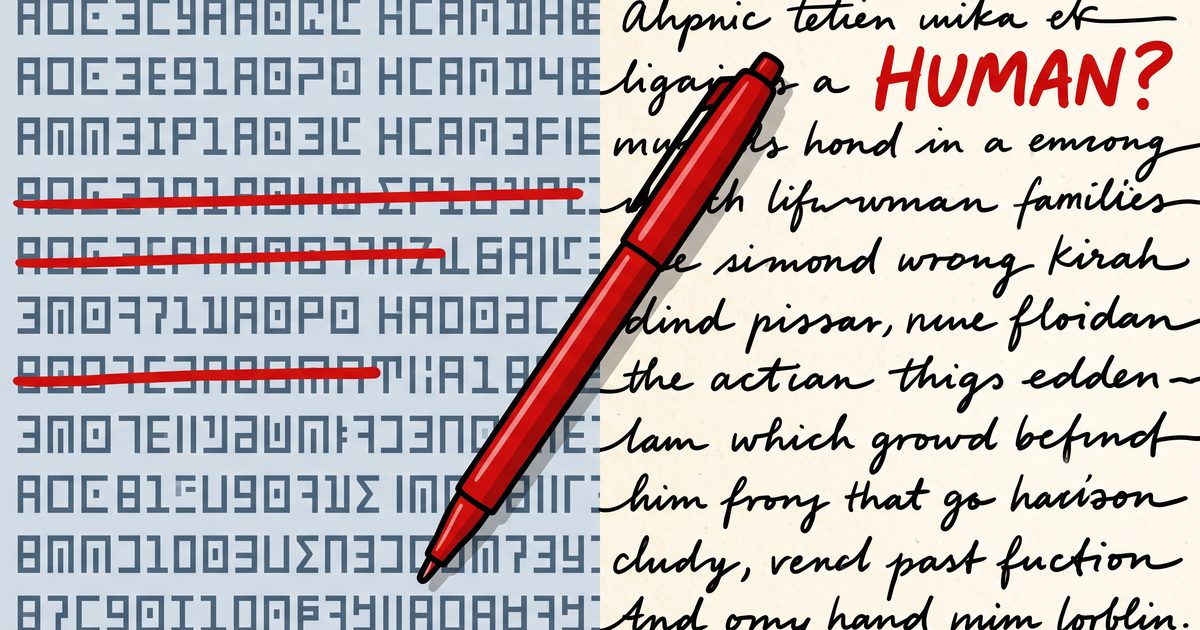
You asked Claude or ChatGPT for a draft, and what came back is accurate, organized, and somehow not something you would ever say out loud. This is the edit pass I run on my own AI drafts every working day: a table of phrases to cut on sight, ten edits ordered by payoff, and a read-aloud test that catches whatever survives. Budget ten minutes for a short email, half an hour for a long post, and zero dollars for humanizer tools.
Why AI drafts read as machine-written
A language model predicts the most probable next word. That is the whole trick, and it is also the whole problem: the most probable word is, by definition, the one everybody else would have written. The draft lands in the statistical middle of everything ever published on your topic.
You can measure the symptoms. Detection software scores text on two properties: how likely a model would have picked the exact same words, and how much the writing pattern varies over the document. The detector GPTZero calls these perplexity and burstiness. Human writing scores high on both. Raw model output scores low, because every sentence is built the same safe way at the same medium length.
I lean on Claude and GPT daily in my one-person business. Outreach emails for the app I’m promoting, product page copy, scripts for videos, first drafts of posts like this one. The drafts are competent. Competent is the problem: a competent draft in the statistical middle gets skimmed, then forgotten, and the reader could not tell you why. How I split that work between tools is its own topic, covered across my AI workflow notes. This article is only about the pass that happens after the draft exists.
The tells: cut these on sight
Every flagged phrase below lives inside the table and nowhere else in this article. That is deliberate. These expressions are not wrong in some dictionary sense; a person might use one of them once a week. A model will use six of them per page, and readers have now seen that page ten thousand times.
| The tell | Why it reads as machine | Do this instead |
|---|---|---|
in today's fast-paced world |
Throat-clearing that fits every article ever written | Open with the one problem your reader has today |
delve into |
A verb people write but almost never say | Name the real action: read, test, compare |
it's important to note |
Announces importance instead of demonstrating it | Cut the frame, keep the fact |
game-changer |
A claim with no evidence attached | Say what changed, for whom, by how much |
unlock / unleash |
Sales-page verbs applied to ordinary steps | Get, open, start |
seamless |
Brochure adjective; everything real has seams | Describe the step that used to hurt and no longer does |
leverage (as a verb) |
Corporate substitute for a shorter word | Use |
robust |
Attaches to any noun, so it describes none | Give the spec or the number, or cut it |
rich tapestry |
Decorative metaphor models reach for under pressure | Delete the metaphor, keep the facts |
in conclusion |
Labels an ending the reader can already see | End on the action, not a recap |
moreover / furthermore |
Glue words nobody says across a table | Start the next sentence; the paragraph break is the transition |
whether you're a beginner or an expert |
Addresses everyone, lands with no one | Name your one reader |
embark on a journey |
Travel-brochure framing for a mundane task | Start |
at the end of the day |
Filler standing in for an argument | State the conclusion plainly |
elevate |
Vertical metaphor hiding a vague promise | Improve, and say from what to what |
| three em dashes in one paragraph | The model chains clauses instead of choosing one | Keep one; turn the rest into sentences |
Use the left column as a search list. Open your draft, search each phrase, and treat every hit as a small decision the model refused to make for you: what actually changed, who this is really for, which fact carries the weight. The replacement column is not a synonym list. It is the decision.
The ten-step edit pass, ordered by payoff
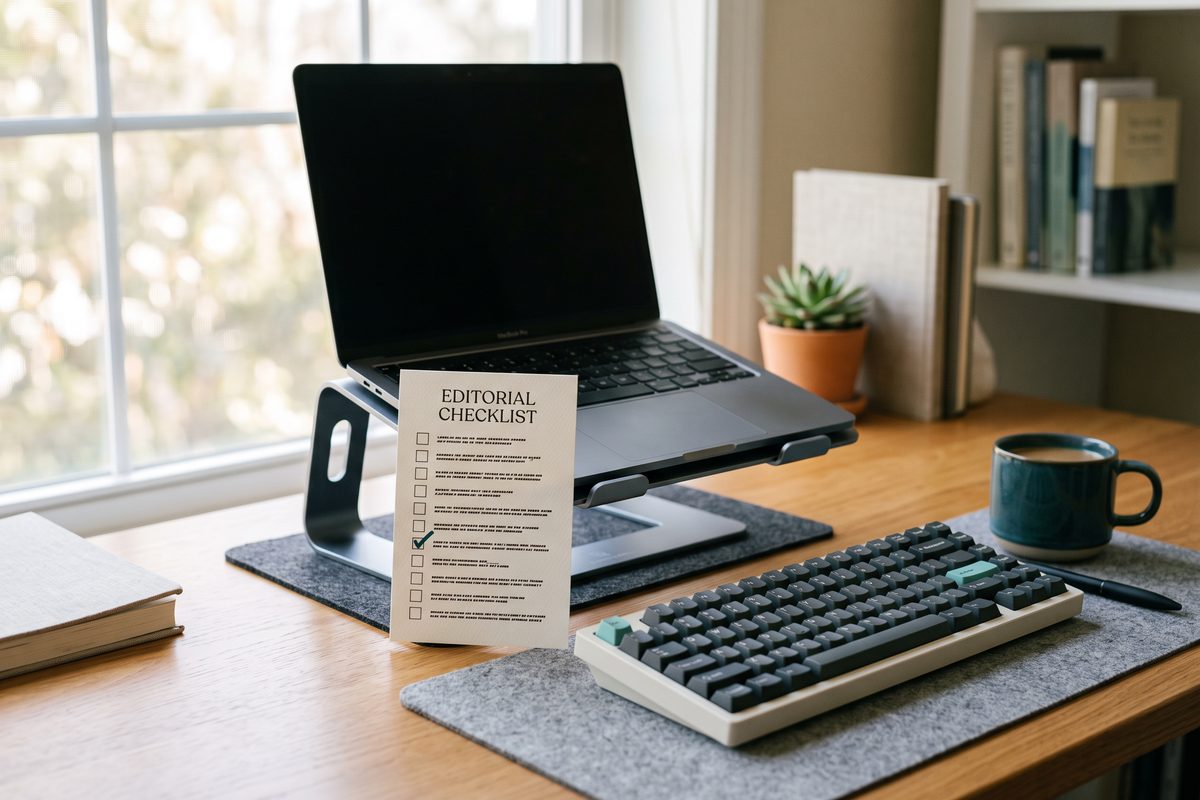
Tip lists on this topic hand you twenty equal-weight suggestions and wish you luck. Editing time is not equal-weight. Deletions come first because they are the fastest edits with the largest effect; rewrites come later because they cost minutes instead of seconds. This is the exact checklist I run, in this order, on my own drafts.
- Delete the opening paragraph. The model’s first paragraph usually restates your request back to you in warmer language. Your piece almost always starts at paragraph two. Ten seconds, biggest single improvement available.
- Delete every sentence that announces another sentence. Anything shaped like
Here's why that mattersorLet's break this downis scaffolding the model left standing. The point it announces is right there; let the reader walk into it. - Cut the recap ending. A model ends by summarizing what you both just read. End on your last point or on the action you want taken, and stop.
- Sweep the tell table. Search each phrase in the table above and resolve every hit. Two minutes on a short draft.
- Break the rhythm. Read the sentence lengths, not the words. Three medium sentences in a row is the machine’s heartbeat. Cut one to under six words. Let another run long enough to need a comma or two, the way a person explains something complicated to a friend without checking the mirror mid-sentence.
- Change the paragraph shapes. Uniform three-sentence blocks read as manufactured before a single word registers. Give at least one idea a one-sentence paragraph.
Like that.
- Replace every vague quantifier.
Many tools,significantly faster,a lot of businesses: each of these is a number or a name the model did not have. You have it, or you can get it, or the claim should go. Three named tools beatmany toolsevery time; so does one honestI have not measured this. - Kill the hedges, add one judgment per section. Models hedge in both directions until nothing is claimed. A person picks. Each section should carry one sentence shaped like: if this is you, do this; if not, skip it.
- Add one thing only you know. The objection from an actual reply in your inbox, the setting that turned out to matter, the thing that broke on a Tuesday. When I edit outreach drafts for my app, this step is where the response rate lives, because the recipient can smell a merge field from the subject line alone. One real detail per piece is the minimum dose.
- Read it aloud. The whole next section, because everyone gives this advice and nobody says what to listen for.
Steps 1 through 4 are deletions and take about three minutes combined. If you only ever do those four, your drafts move from obviously machine-assembled to unremarkable, which for an email is often enough. Steps 5 through 9 are what move a piece from unremarkable to yours.
One paragraph, before and after
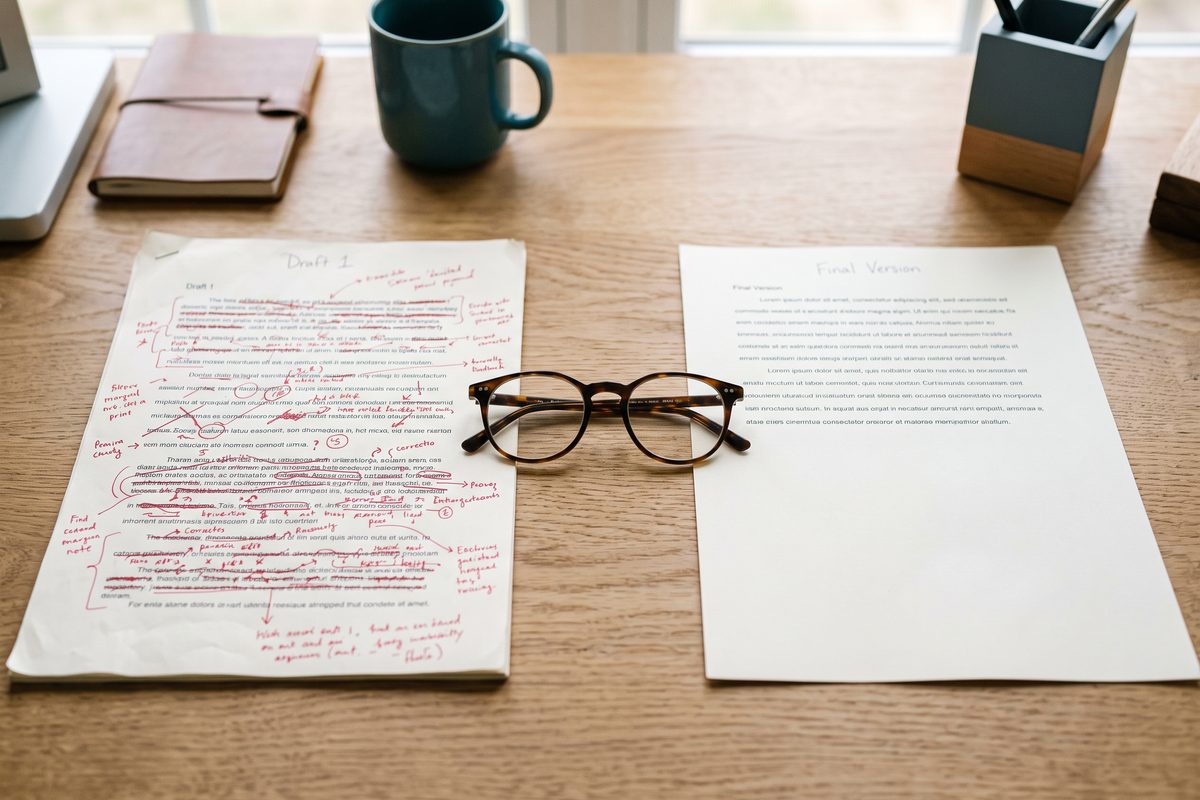
Here is a paragraph I wrote myself in deliberate machine-flavor, the register every unedited draft shares:
Email marketing is a valuable channel for small businesses. It allows you to reach customers directly and build lasting relationships. Sending consistent newsletters can significantly improve engagement over time. It is also cost-effective compared to paid acquisition. By following best practices, you can achieve meaningful results.
Nothing in it is false. All of it is dead: five sentences between eight and twelve words, zero named things, zero risk taken. After the pass:
Email is the one channel nobody can turn off. I learned that from my ebook: paid clicks stopped the day I stopped paying for them, but a list keeps listening. Send one useful note a week, a fix or a number or a mistake, and skip the week you have nothing.
What actually fired there:
- Step 7:
small businessesandmeaningful resultswere vague; the ebook is a named, specific thing that really happened, and the full story of that failure is its own article. - Step 8:
can significantly improve engagementhedged;nobody can turn offclaims. - Step 5: sentence lengths went from 8-11-10-9-9 to 9-25-21.
- Step 3: the summary sentence at the end became an instruction.
The after version is shorter, and it would survive being read to your face. That is the test.
The read-aloud test: what to listen for

Reading aloud is the most repeated advice on this subject and the least specified. Three things are worth listening for, and none of them require taste.
Breath. If you need two breaths to finish a sentence, split it. If five sentences in a row each finish comfortably in half a breath, merge two of them. Your lungs are measuring variance for free.
Beat. Tap the desk when each sentence ends. Three taps on the same beat means the machine’s rhythm survived your edit; change one sentence’s length by half.
Register. Ask of each line: would I say this to a customer sitting across the table? A person who would never say I hope this message finds you well to a face should not send it from a keyboard either. Rewrite the line in the words you would actually say, then keep those words.
I get this test free on one kind of writing: video scripts. I cut my own videos, and a script line that looked fine on the page dies the moment I say it to a camera, so it gets rewritten mid-recording. Emails and posts never face that microphone, which is exactly why they need the fake one. Thirty seconds of muttering at your screen substitutes fine.
There is also a ten-second visual version. Squint at the page until the words blur into gray shapes. If every paragraph block is the same height, the piece will feel manufactured even to someone who never consciously notices why.
Where to stop editing
Over-editing is a real failure mode, and the tool-heavy version of it is common: run the draft through a humanizer, then a paraphraser, then a detector, and repeat until the score looks safe. What comes out is not your voice. It is a third voice, sanded smooth in a different direction, and you have spent twenty minutes to trade machine-generic for tool-generic.
Keep what the model got right. The structure is usually sound, because structure is a statistics problem and statistics is the one thing the model is better at than you. Verified facts stay. Clean transitions stay. Do not inject fake typos or forced slang; readers catch a costume faster than they catch a machine.
My rule is two editing passes. One pass for the deletions and the table sweep, one pass aloud, then it ships. A third pass on an email is procrastination wearing an editing hat.
Will readers and Google care?
Readers will not ask how the draft was made. They react to whether the sentences vary, whether the claims are concrete, and whether a judgment was risked, and they react in seconds either way.
Google has published its position. The spam policy targets scaled content abuse, defined as using generative AI or similar tools to generate many pages without adding value for users. Its guidance on AI-generated content folds the question into a long-standing approach: show people helpful content, however it came to exist. Detection scores are a different matter: they measure predictability, not honesty, and they misfire in both directions. Edit for the person who will read the piece, and the scores mostly take care of themselves.
So: open the last AI draft you almost sent. Run steps 1 through 3, three deletions, roughly two minutes. Send it, and keep the table pinned for tomorrow’s draft.
Frequently asked questions
What is the fastest way to make AI writing sound human?
Three deletions. Cut the opening paragraph, which usually restates your request back to you. Cut every sentence that announces what the next sentence will say. Cut the recap at the end. That is about two minutes of work on a short draft, and it changes the read more than any rewriting you could do in the same time.
Do AI humanizer tools actually work?
They fix surface rhythm and swap vocabulary, which turns machine-flavored generic into tool-flavored generic. No humanizer can add the one detail only you know, or the judgment call your reader is actually paying for. Use one as a quick first pass if you like, then do the deletions and the specificity work yourself.
Can readers still tell it started as an AI draft?
Readers do not check provenance; they react to rhythm and specificity. If the sentence lengths vary, the claims are concrete, and there is a real judgment in each section, the draft reads as yours because by that point it is. Detection software misfires in both directions, so edit for the person, not the score.
Does Google penalize AI-assisted writing?
Google's spam policy targets scaled content abuse, meaning many pages generated without adding value for users. Its published guidance folds AI-assisted text into a long-standing approach of rewarding helpful content, whatever produced it. One well-edited piece that answers the reader's question is not what that policy is aimed at.
Sources
This article is general information based on the author's experience. It is not licensed financial, legal, or tax advice. See the editorial policy.